
SpspExcitation#
- class pypulseqpp.sequences.SpspExcitation[source]#
Bases:
RfModuleSpectral-spatial excitation using SLR subpulses on an alternating gradient.
The spectral time-bandwidth product and bandwidth set total duration. Subpulse count controls spectral repetition spacing. The subpulses play under alternating gradient lobes, so a slice offset is a phase that follows the gradient’s area rather than a frequency: move the slice with
shift().- Parameters:
system (pypulseqpp.Opts) – System limits.
flip_angle_deg (float) – Nominal flip angle (degrees).
thickness_m (float) – Slice thickness (m).
spectral_bandwidth_hz (float) – Spectral passband (Hz). With
spectral_time_bw_productit fixes the total duration.freq_offset_hz (float, default=0.0) – Centre of the spectral band (Hz).
is_slab (bool, default=False) – Merge any rephaser into the selection gradient rather than a second block.
rephase (bool, default=True) – Include a slice rephaser.
spatial_time_bw_product (float, default=4.0) – Time-bandwidth product of each spatial subpulse.
spectral_time_bw_product (float, default=3.0) – Time-bandwidth product of the spectral envelope.
n_subpulses (int, default=10) – Subpulses in the train.
axis ({'z', 'x', 'y'}, default='z') – Selection axis.
use (str, default='excitation') – Pulseq RF-use tag, used by trajectory integration.
- Attributes:
rf (RfEvent) – The pulse.
gz (GradEvent) – The alternating selection gradient.
gz_reph (TrapEvent) – Its rephaser, only when needed, rephase=True and is_slab=False.
- Raises:
ValueError – If a size is not positive,
axisis not a gradient channel, or the requested selectivity exceeds a gradient limit.
Examples
>>> import pypulseqpp.sequences as design
>>> import pypulseqpp as pp
>>> system = pp.Opts(max_grad=40, grad_unit="mT/m", max_slew=180, slew_unit="T/m/s")
>>> water = design.SpspExcitation(
...     system, 30.0, thickness_m=10e-3, spectral_bandwidth_hz=300.0
... )
>>> len(water.blocks), water.gz.channel
(2, 'z')
>>> water.gz.type
'grad'
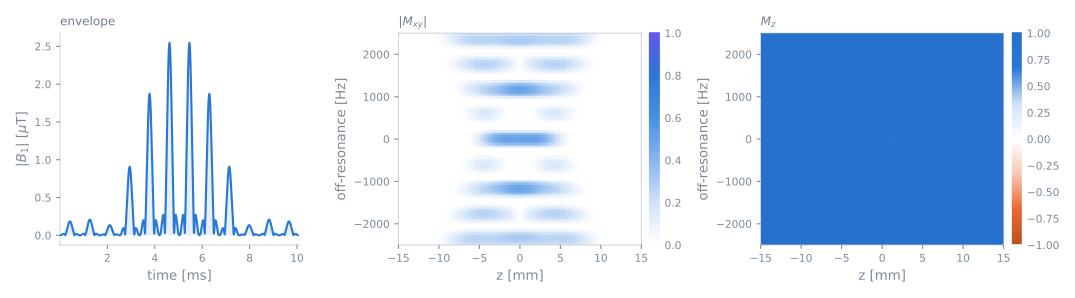
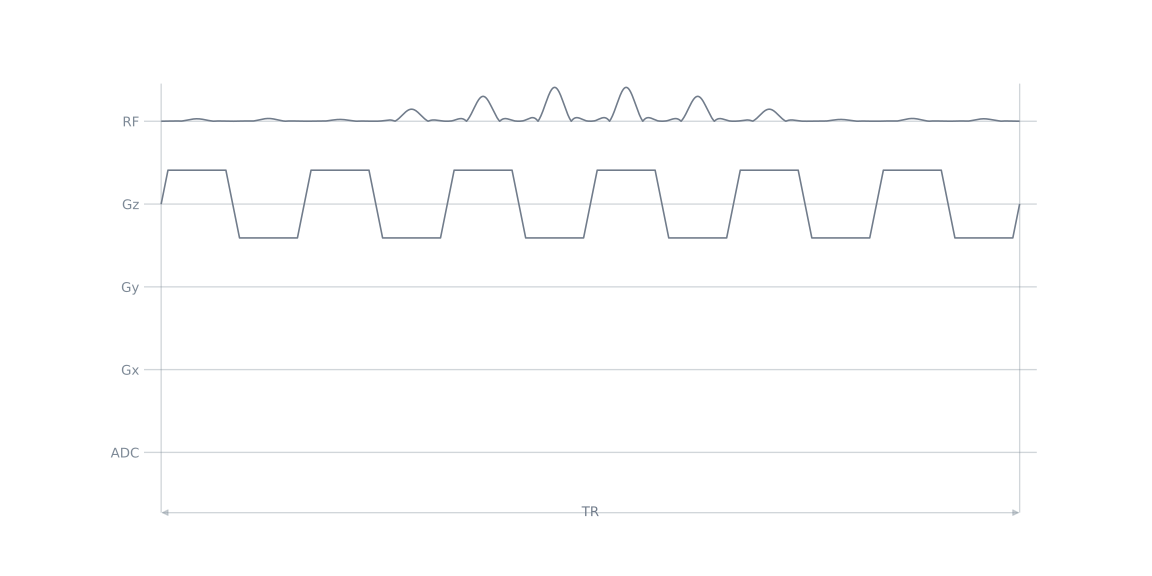
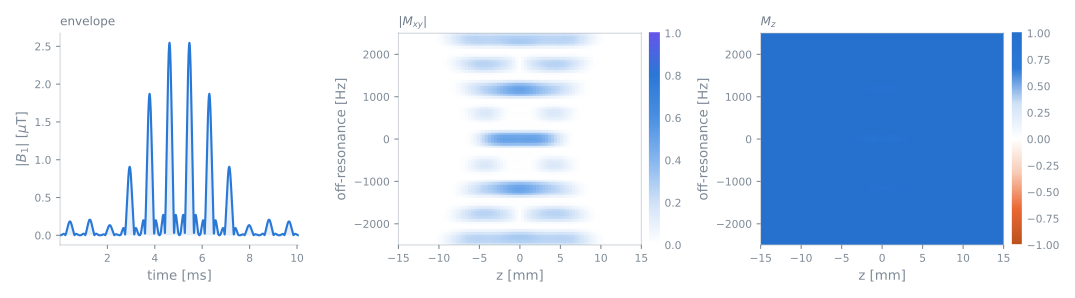
The subpulse train under its alternating gradient, and the transverse magnetization over position and frequency together. The spectral passband repeats at the subpulse rate, which
n_subpulsessets: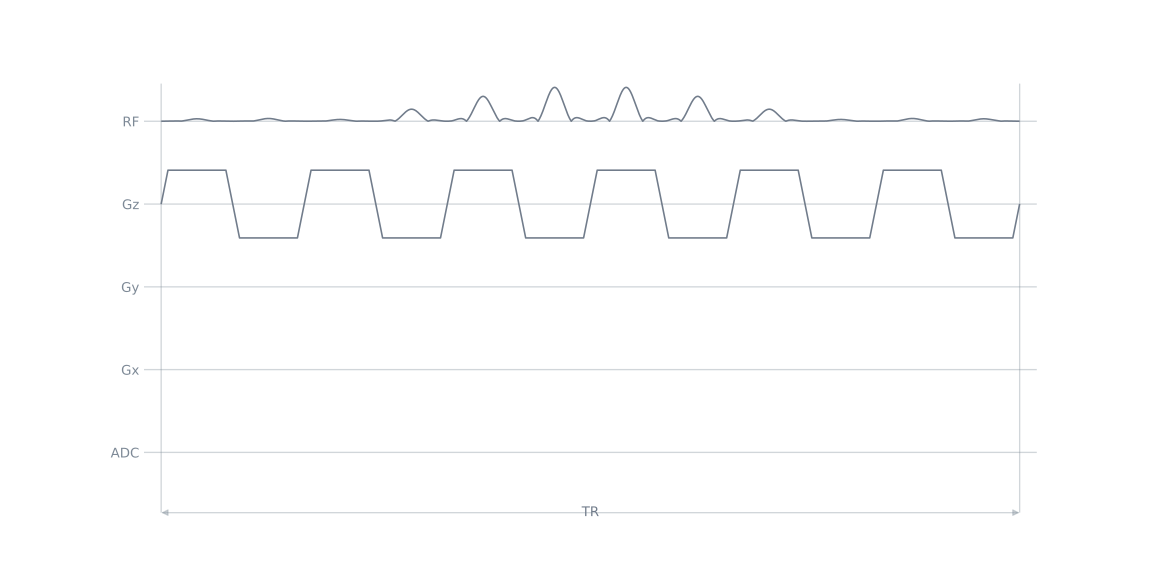
Methods
Build the module's block layout; implemented by the subclass. |
|
Publish events from the caller's locals and register keyword aliases. |
|
Publish named events without requiring prior block registration. |
|
Move the selected slice to |
|
Simulate this module's pulse across off-resonance. |
Attributes