

NonSelectiveExcitation#
- class pypulseqpp.sequences.NonSelectiveExcitation[source]#
Bases:
RfModuleRectangular RF excitation without a selection gradient.
- Parameters:
system (pypulseqpp.Opts) – System limits.
flip_angle_deg (float, default=10.0) – Flip angle (degrees).
duration_s (float, default=0.001) – Pulse duration (s); spectral width scales inversely with duration. Lengthened when the pulse would peak above the derated
system.max_b1: to a whole number of two block rasters whenduration_sis one, else to the RF raster.use (str, default='excitation') – Pulseq use tag. Undefined pulses are treated as excitations by k-space analysis.
freq_offset_hz (float, default=0.0) – Transmit frequency (Hz) and phase (rad) offsets of the pulse. A scan loop changes
module.rf.freq_offsetandmodule.rf.phase_offsetper shot instead of rebuilding the module.phase_offset_rad (float, default=0.0) – Transmit frequency (Hz) and phase (rad) offsets of the pulse. A scan loop changes
module.rf.freq_offsetandmodule.rf.phase_offsetper shot instead of rebuilding the module.
- Attributes:
rf (RfEvent) – The pulse.
pulse_duration (float) – Duration the pulse is designed at (s):
duration_s, or longer wheresystem.max_b1requires.
Examples
>>> import pypulseqpp.sequences as design
>>> import pypulseqpp as pp
>>> excitation = design.NonSelectiveExcitation(pp.Opts(), flip_angle_deg=10.0)
>>> round(excitation.center * 1e6)
500
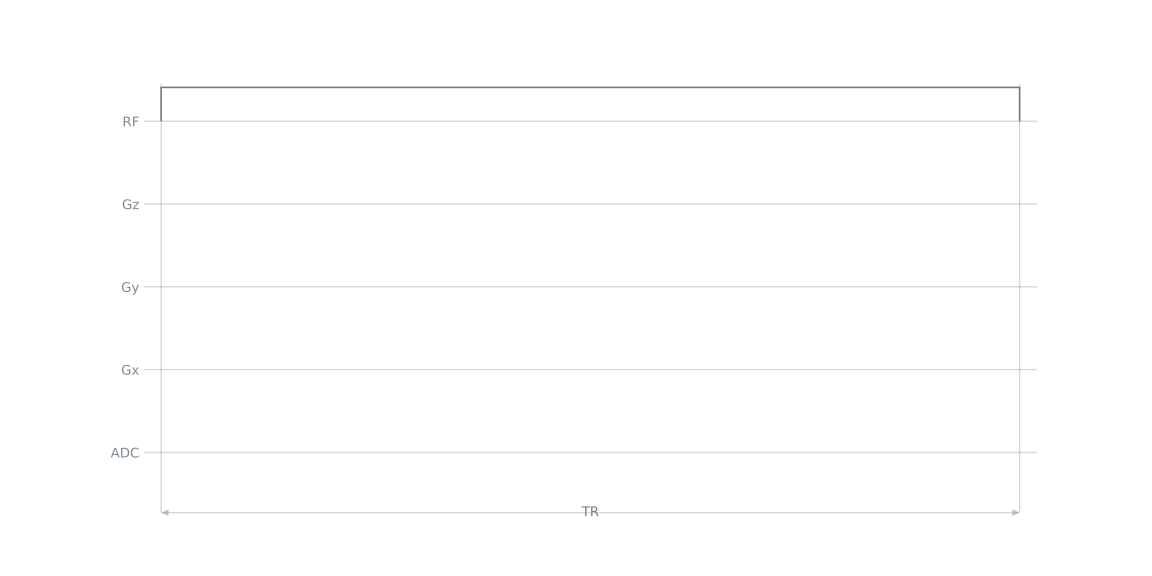
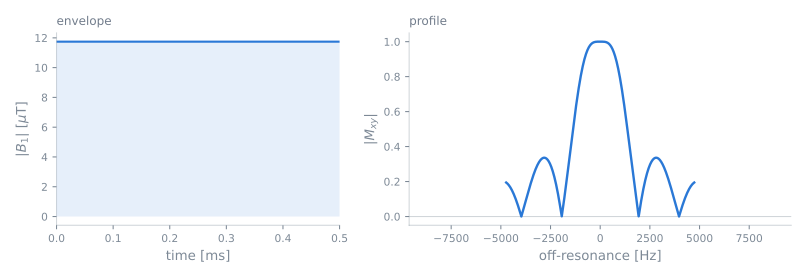
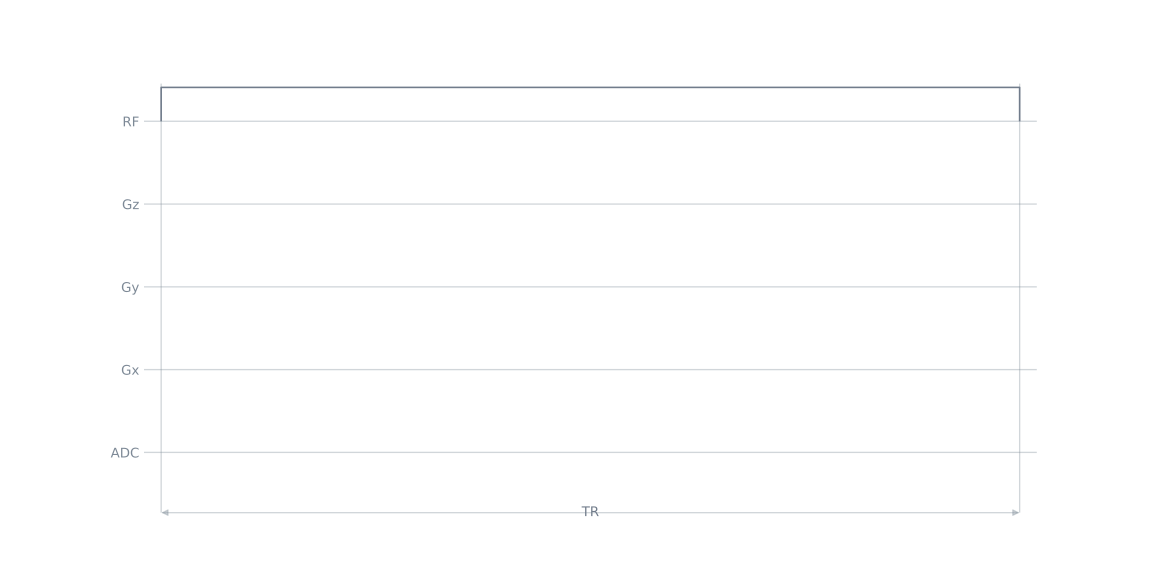
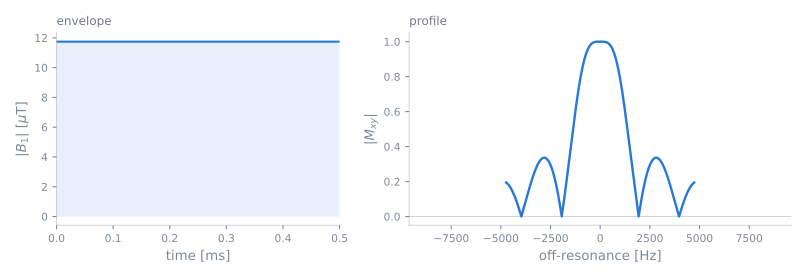
Without a gradient the only selectivity is in frequency, and the profile is the transform of a rectangle:
Methods
Build the module's block layout; implemented by the subclass. |
|
Publish events from the caller's locals and register keyword aliases. |
|
Publish named events, whether or not they were added to a block. |
|
Simulate this module's pulse across off-resonance. |
Attributes